Discover this project
By Wei-Xuan Chai
June 15, 2025
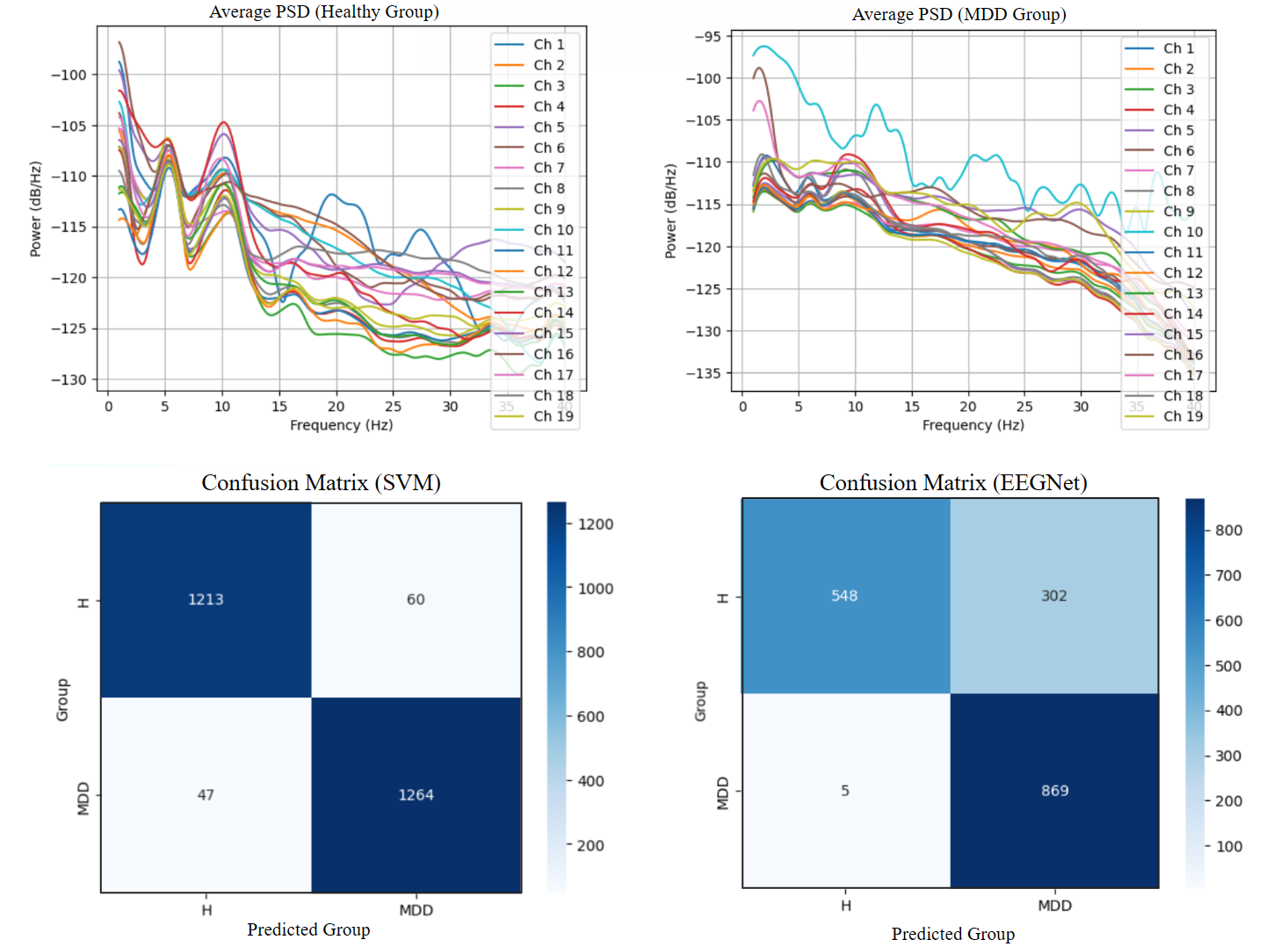
This project was conducted as part of Brainhack School 2025. It aimed to classify major depressive disorder (MDD) using temporal-domain EEG features (i.e., band power), applying both machine learning (SVM) and deep learning (EEGNet) models.
By Wei-Chen Huang
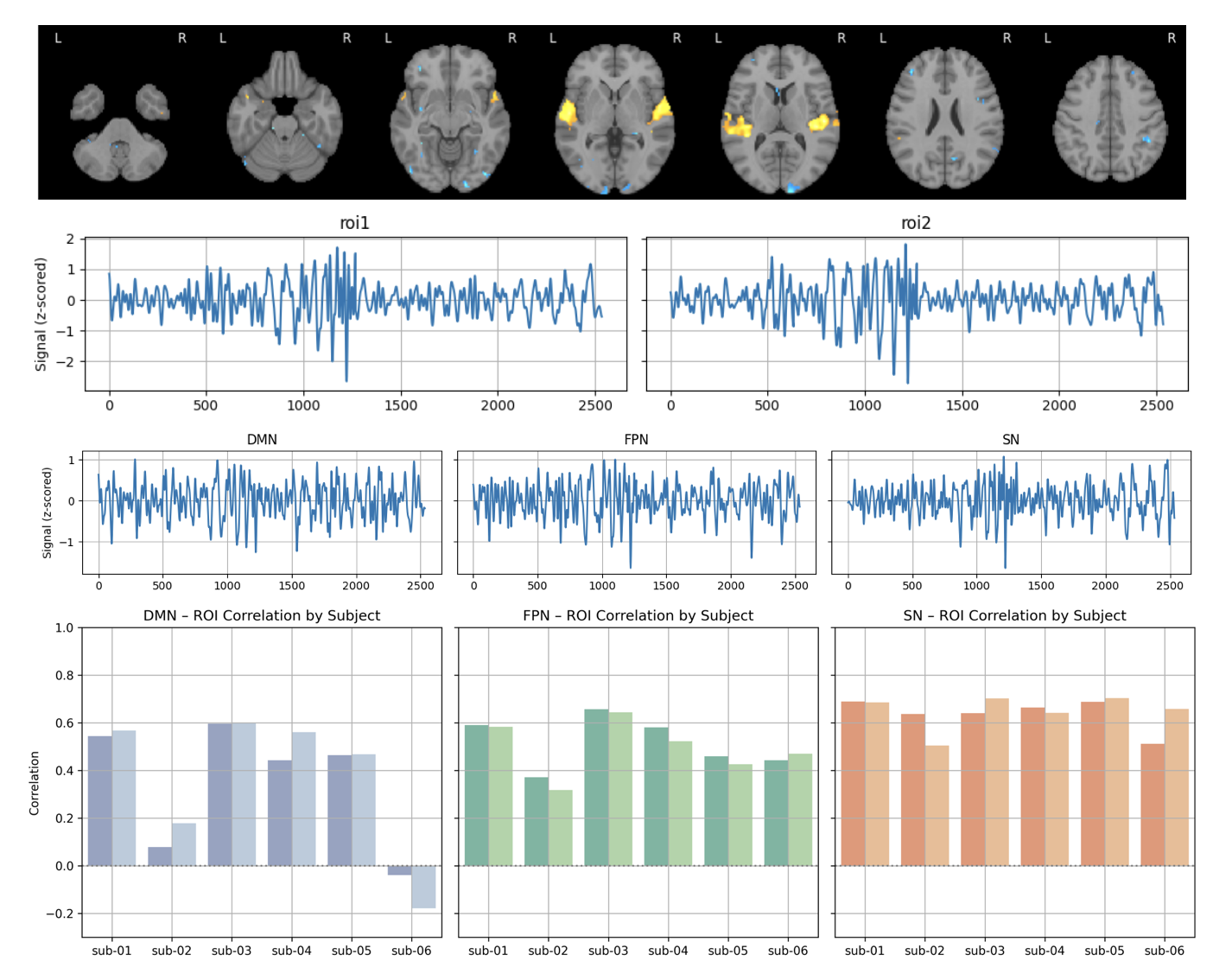
This project examines how language-related brain regions connect with DMN, FPN, and SN during rest, using fMRI data to explore links between functional connectivity and language comprehension.
By Yiping Lu
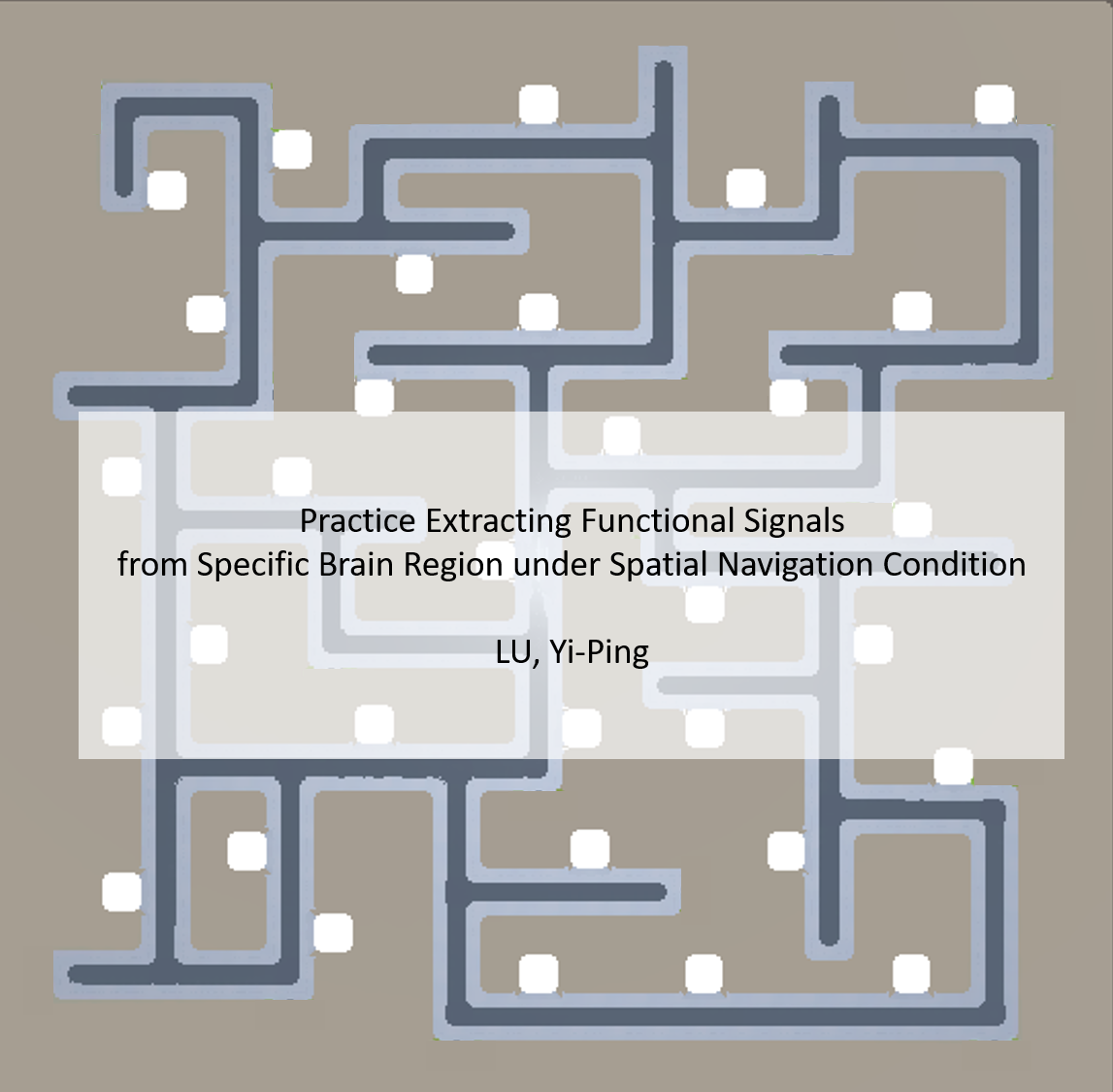
This project aims to extract and analyze fMRI signals from the hippocampus during spatial navigation, using a reproducible workflow based on open tools and data formats.
By Truc (Curt) Nguyen
June 14, 2025
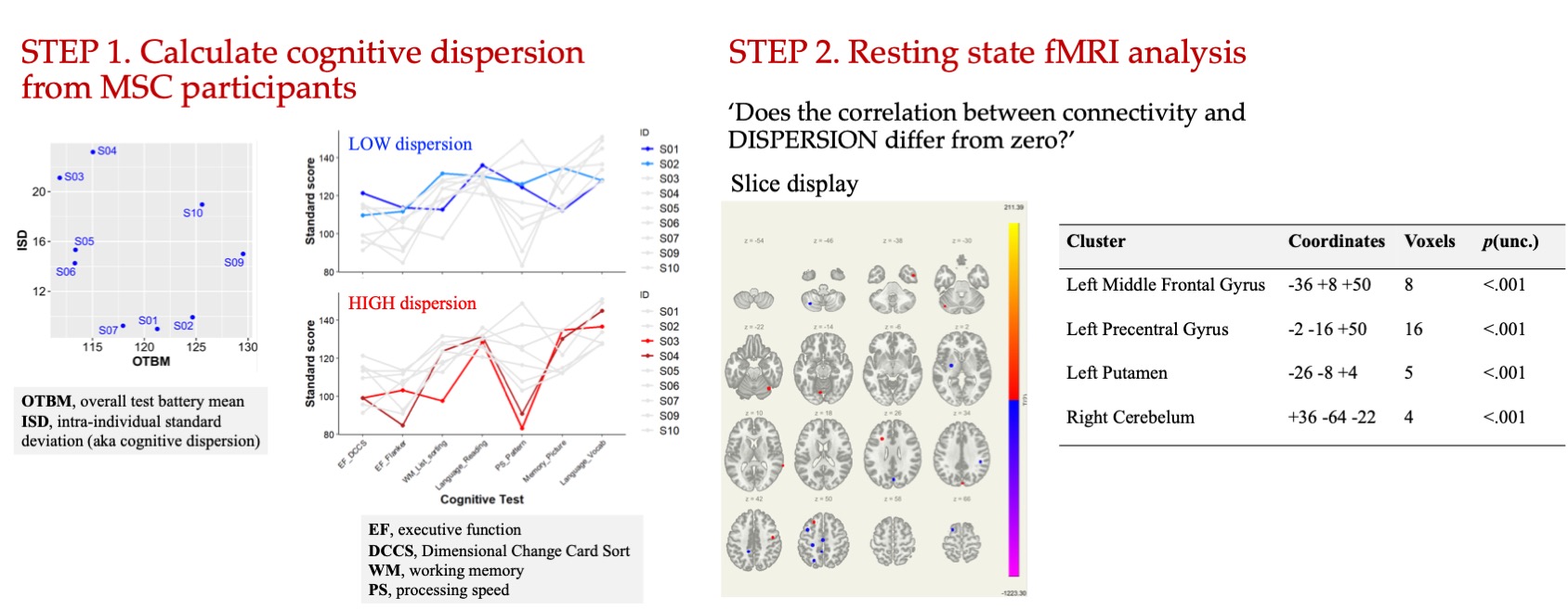
This mini-project for the 2025 Brainhack School is part of my PhD dissertation on Late-Life Cognitive Heterogeneity, where I examine the neural correlates of cognitive dispersion – a measure of within-individual variability – using neuropsychological and fMRI data from the Midnight Scan Club dataset (OpenNeuro ds000224).
By Fabiana Ojeda 歐瑩忻
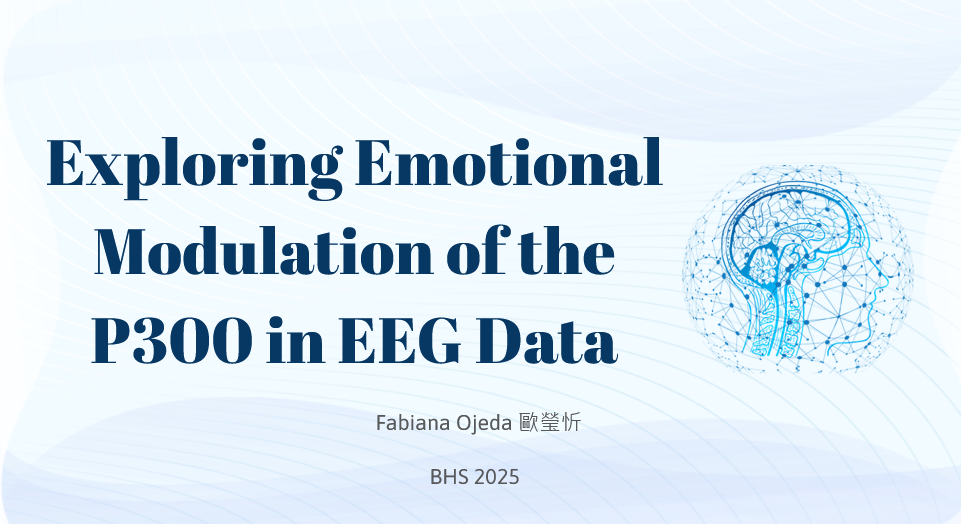
This project explores how deviant auditory tones in a cross-modal oddball paradigm elicit a stronger P300 component using EEG data from the MNE sample dataset. The analysis focuses on ERP comparison and difference waves, setting the stage for future investigations on emotional modulation of P300.
By Stella Ruddy
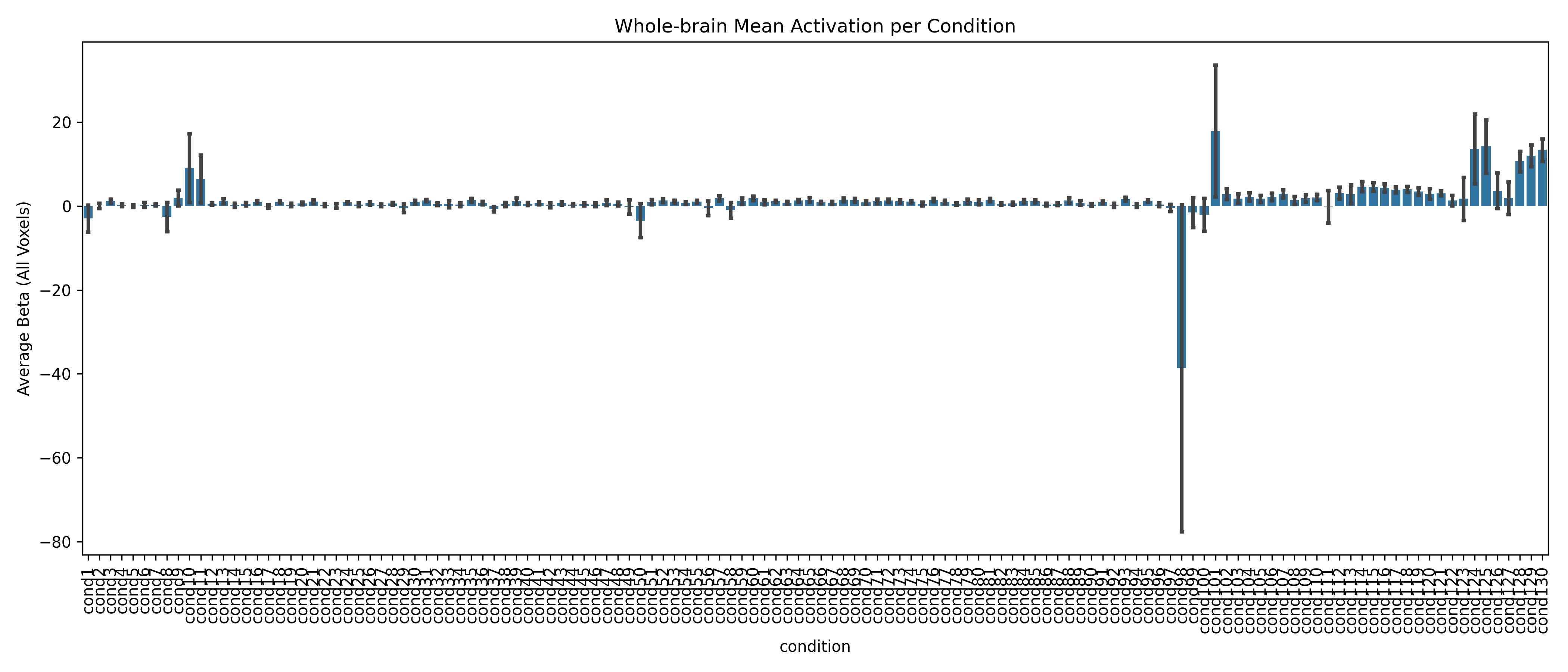
This project aimed to explore tools and techniques used to analyze fMRI brain activation at the first level using data from an open-access dataset. We produced a comprehensive Jupyter Notebook that provides a step-by-step guide to running the analyses, including applying the GLM, defining contrasts, and generating various brain activation maps.
By Wang Chi
This project explores how the brain responds to natural stories via TRF modeling on the SMN4Lang dataset, using acoustic envelope and word-aligned features – and includes an exploratory attempt at word classification using machine learning.
By Tzu-Yun Kung
This project aims to examine how the brain supports two types of inference—active and passive—during the process of posterior belief integration. I applied trial-by-trial analysis to track participants’ learning trajectories over time.
By Cian-Ya Lan, & Jia-Ling Sun
June 13, 2025
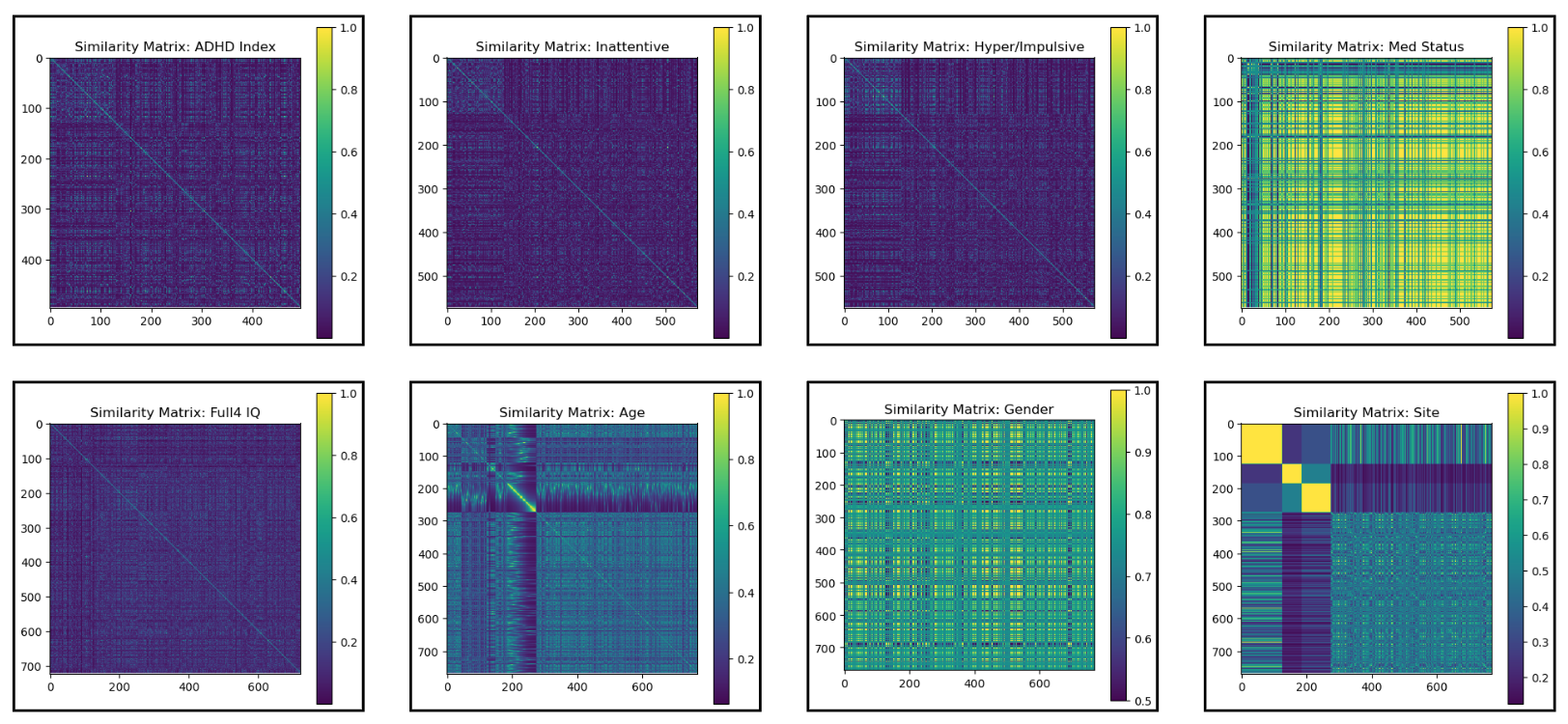
This project applies a contrastive variational autoencoder (CVAE) to Burner-preprocessed MRI data from the ADHD-200 dataset to disentangle ADHD-specific brain features from shared anatomical variation. We explore latent representations using RSA and clustering to better understand neuroanatomical heterogeneity in ADHD.
By Lyanne Zhang, Onjoli Krywiak, Leen Ghanayem, Clarize Donato, Kayla Teopiz, & Quin Xie
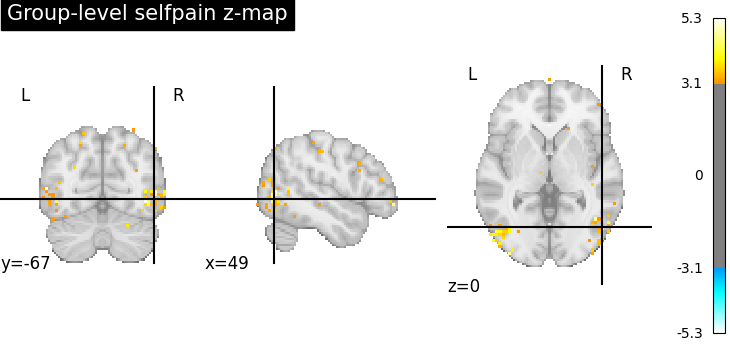
This project examined neural activation and functional connectivity during self-experienced and empathic pain using an open-source fMRI dataset. Analyses focused on several regions of interest, including the anterior cingulate (ACC) and insular (IC) cortices, exploring links to loneliness and social connectedness. Results showed greater activation during self-experienced pain compared to empathic pain, with loneliness predicting ACC activation in the meditation group. No significant differences in connectivity between conditions were found, though some associations with social connectedness emerged. The workflow and results are available in a reproducible GitHub repository.
This is the project gallery from past editions.
103 projects are currently displayed.
159 participants have uploaded their projects.
Copyright (c) 2026, BrainHack School; all rights reserved.
Template by Bootstrapious. Ported to Hugo by DevCows.